CHIP’S TRIP TO UKRAINE
SFSU volunteer Chip Heldman recently turned his curiosity and concern about Ukraine into action: he flew to Poland, then crossed the border into Ukraine where he met local volunteers and had a glimpse of their lived experiences. This is his story.
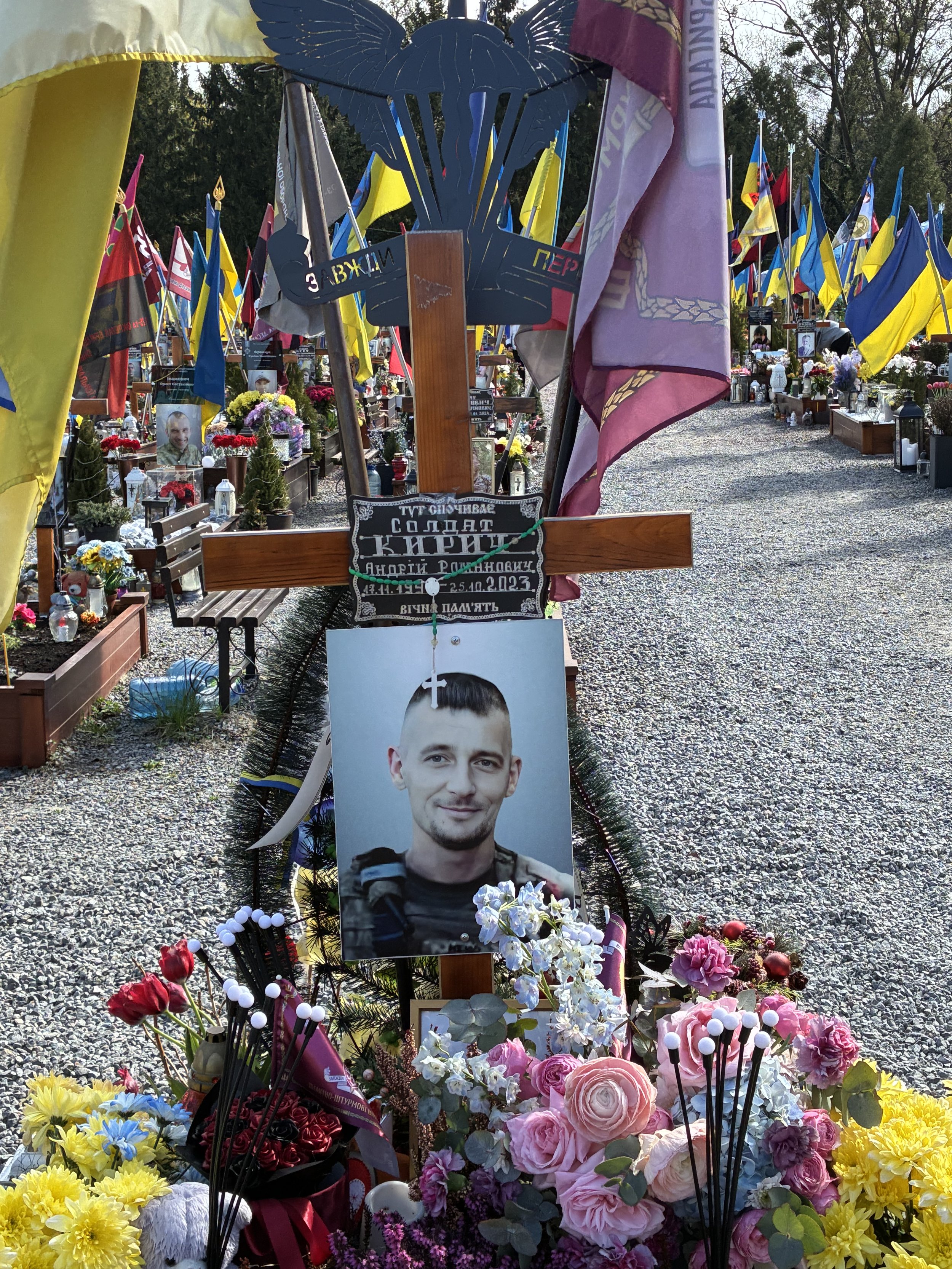
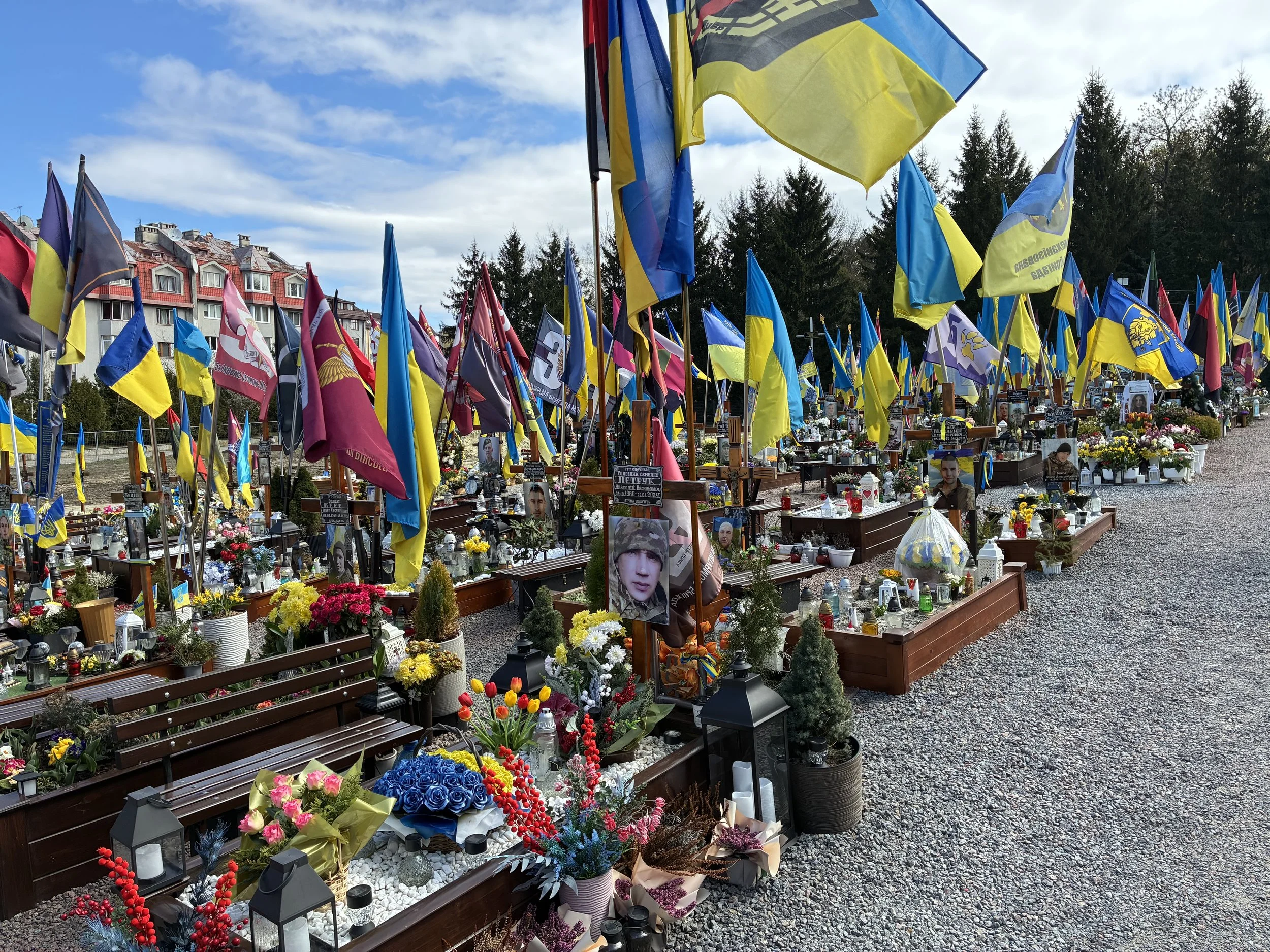
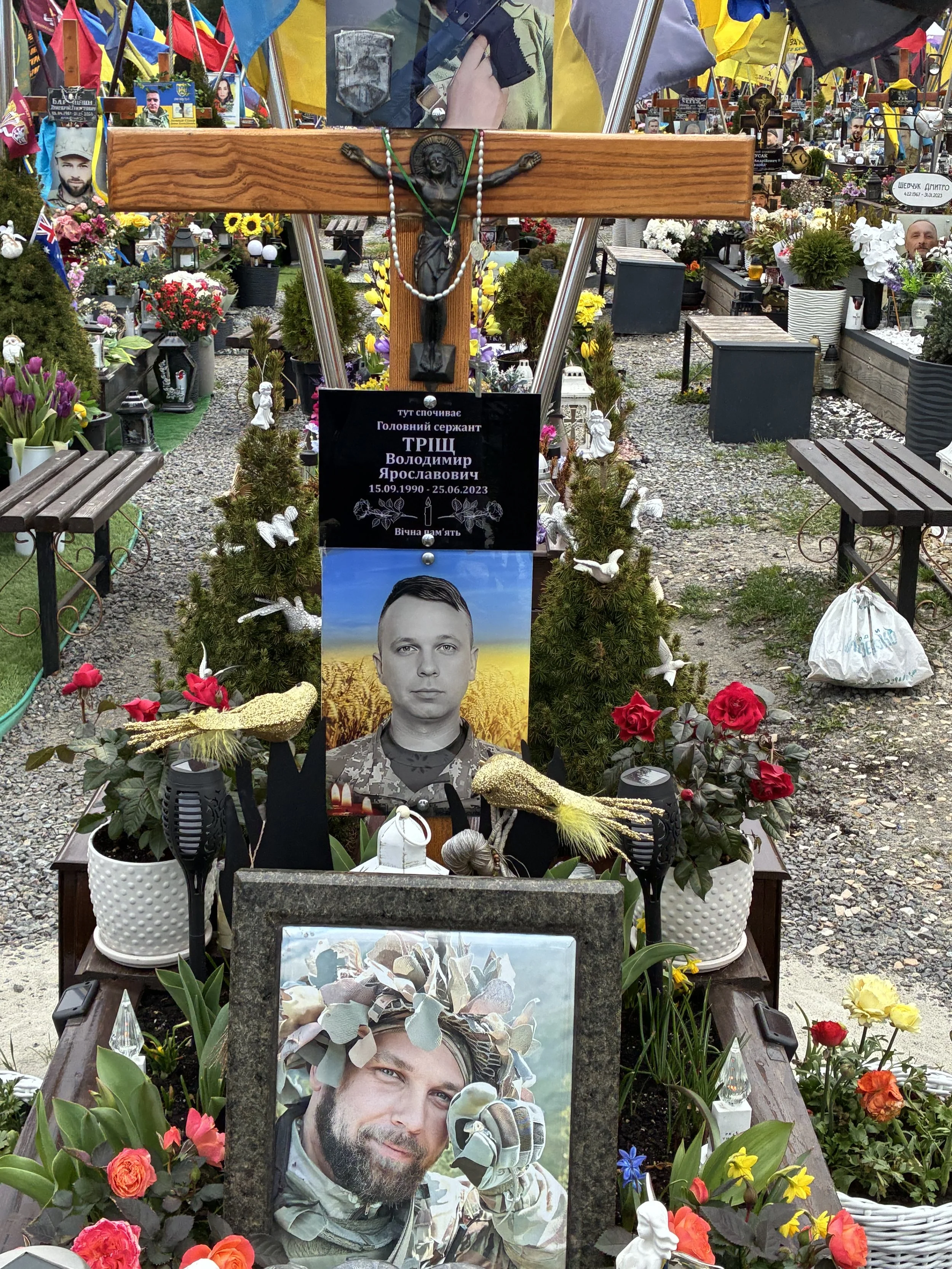
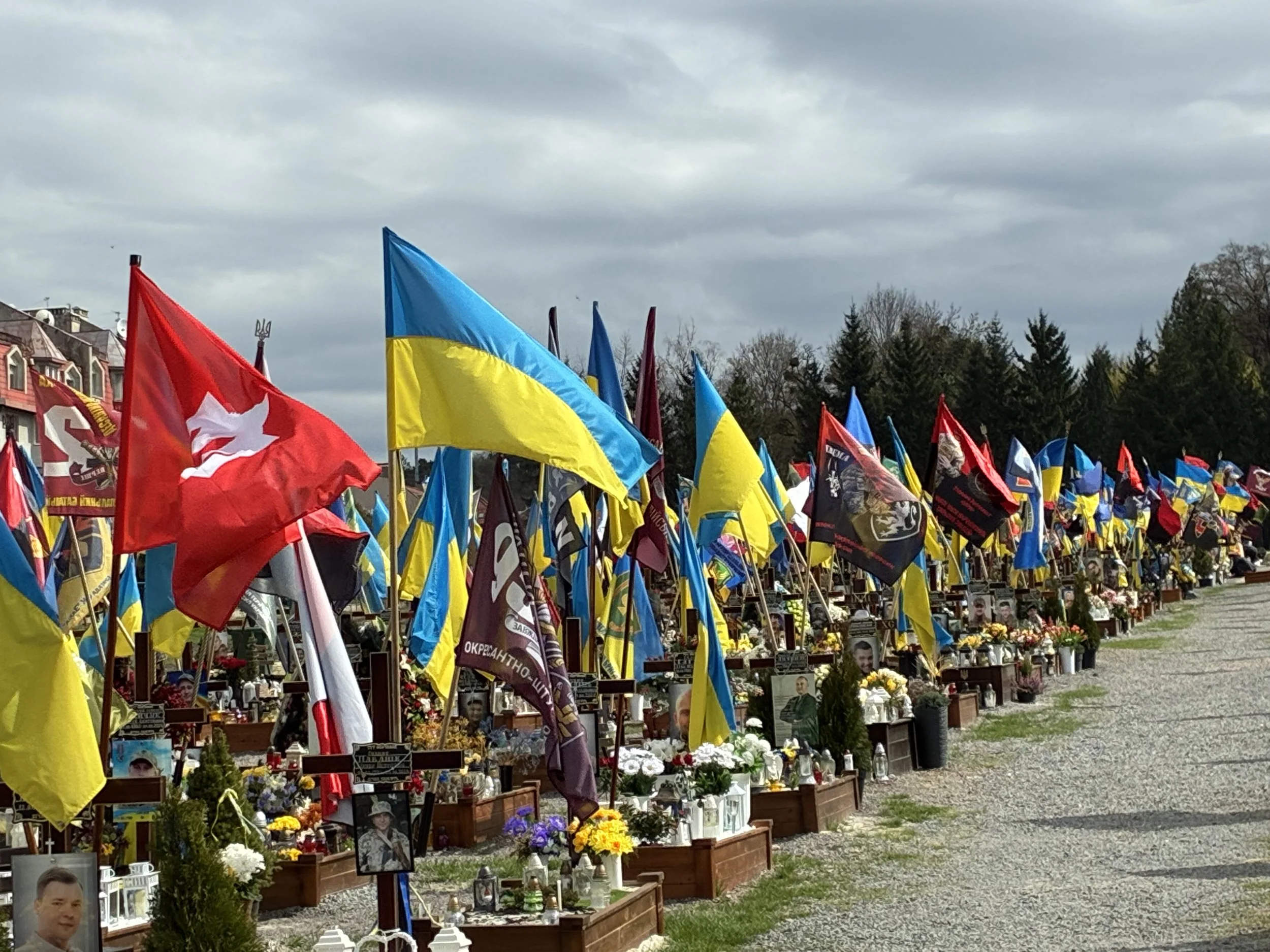
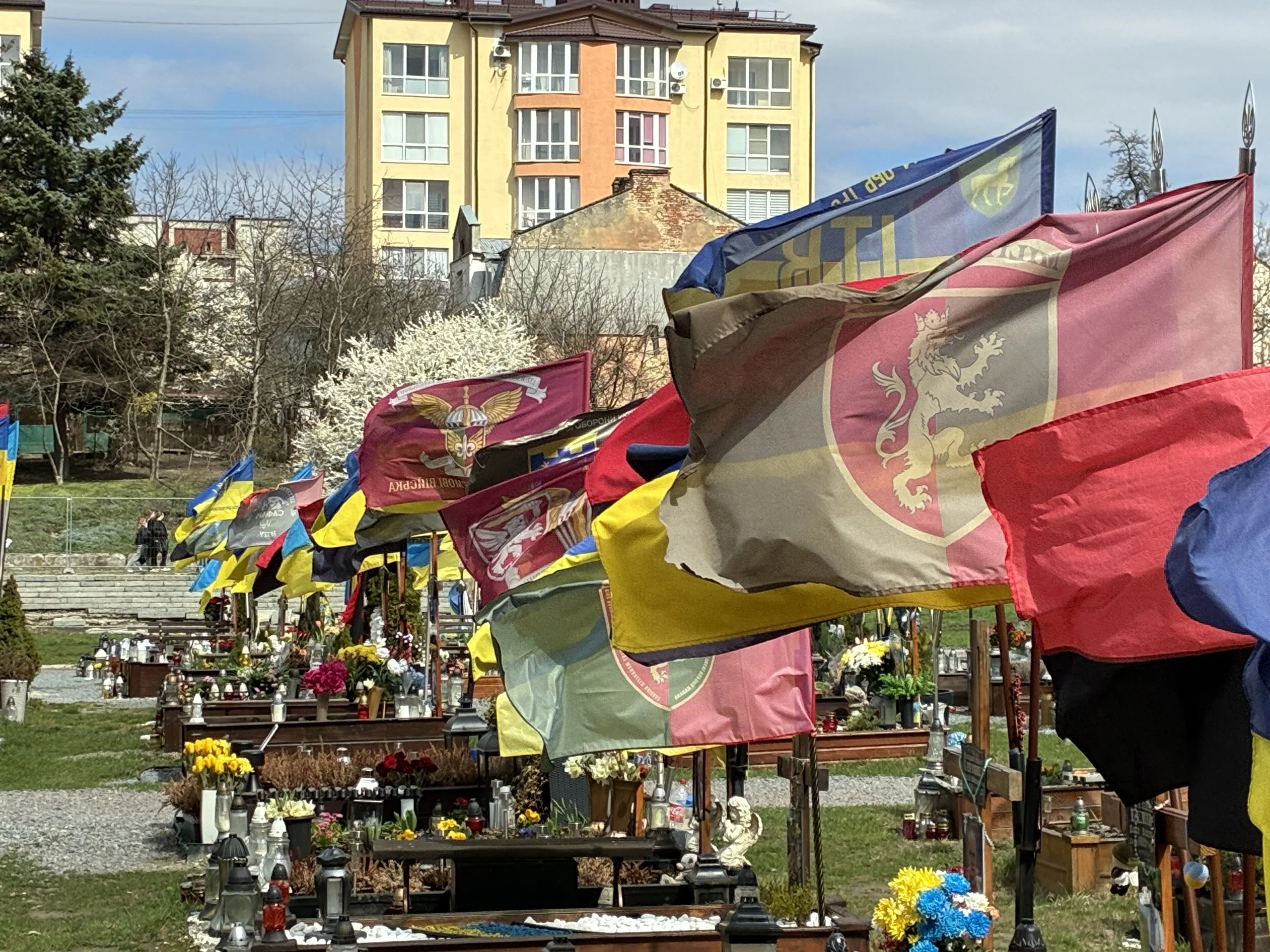
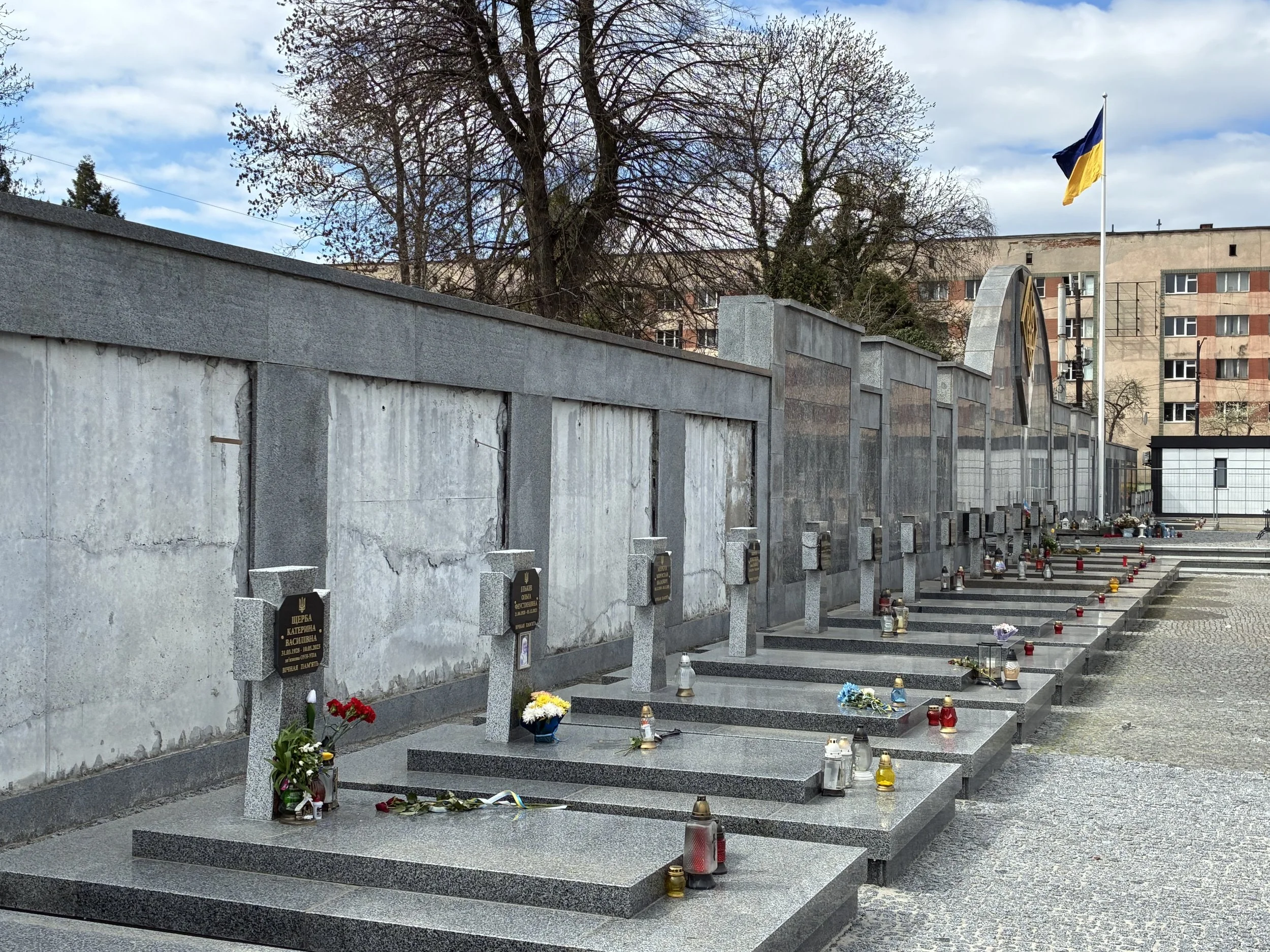
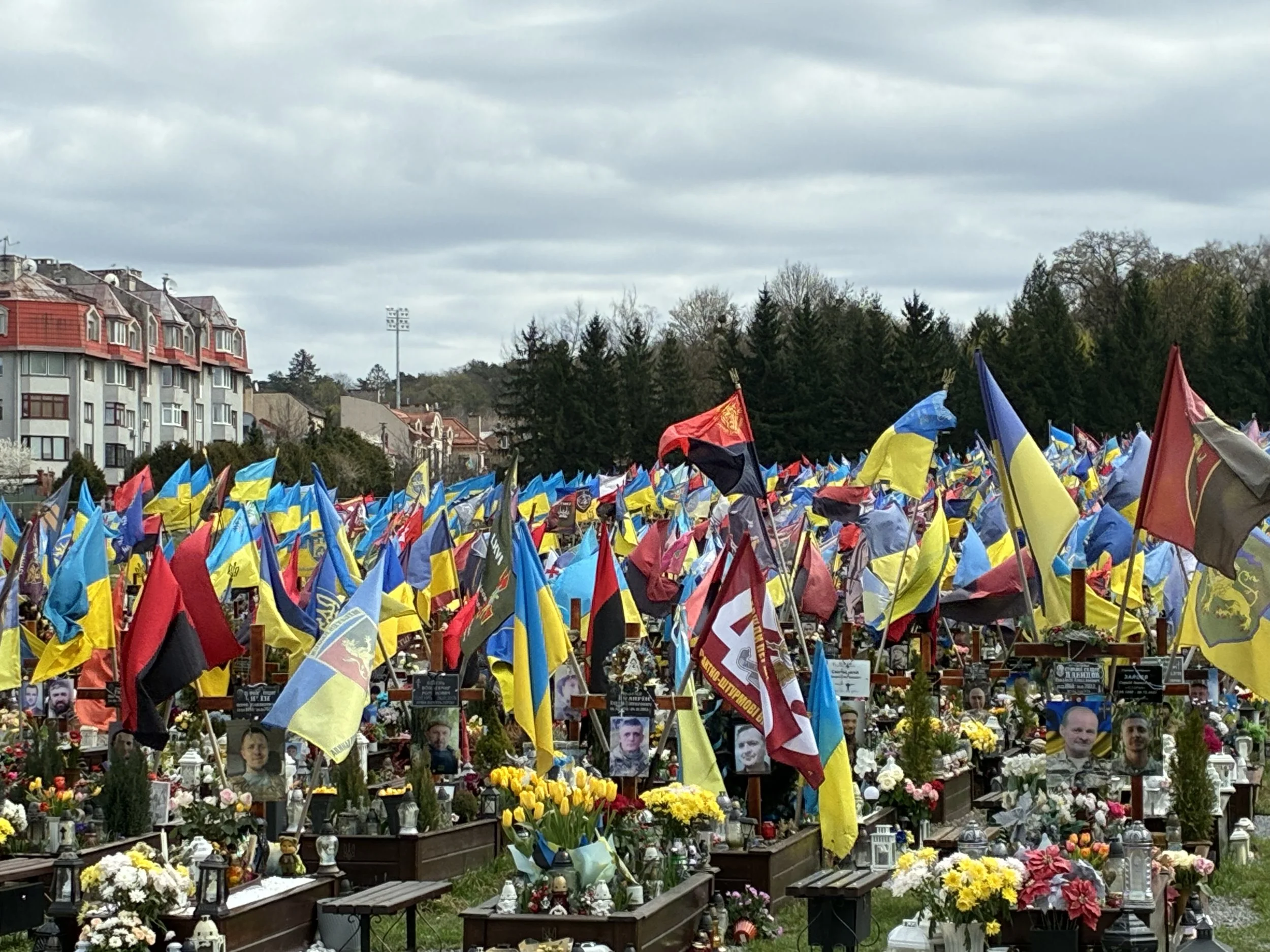
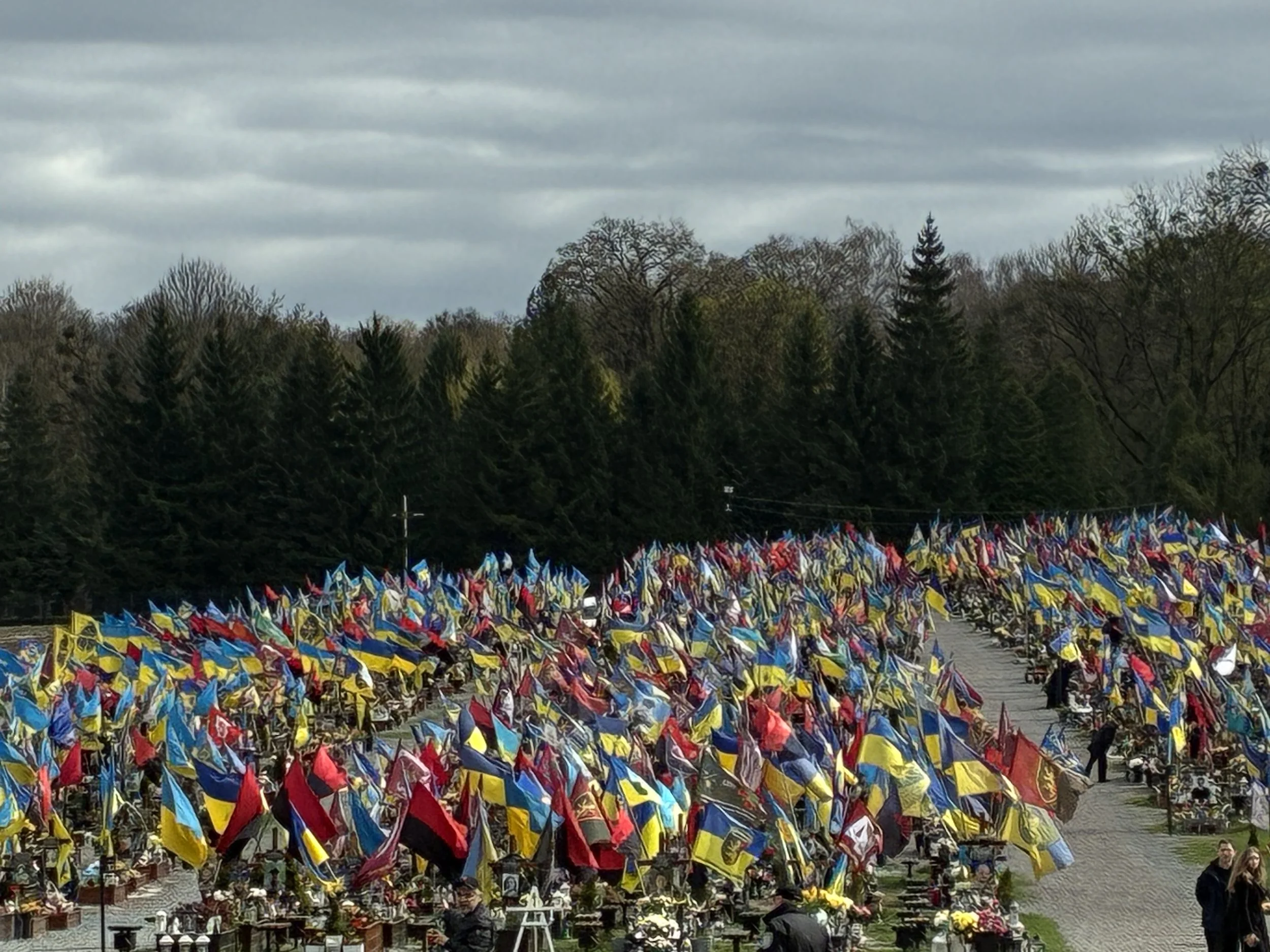
In Lviv, a vibrant European city rich in history and culture, things were mostly peaceful. I saw men in uniforms visiting their loved ones, camouflage, military vehicles, piles of sandbags, and veterans in wheelchairs missing limbs. It felt very strange and sad, but to everyone around me, it was just life. I heard one air raid siren and had been told ahead of time to pay attention to what the locals do— to follow them if they ran. (On this occasion, they didn’t.) I visited the big military cemetery, which is about the size of a football field, full of thousands of carefully tended graves. Each one had candles, flowers, photographs, and multiple Ukrainian flags. There were tens of thousands blowing in the wind. I also went to the Lviv National Opera, which was a beautiful thing to be happening in the middle of a war.
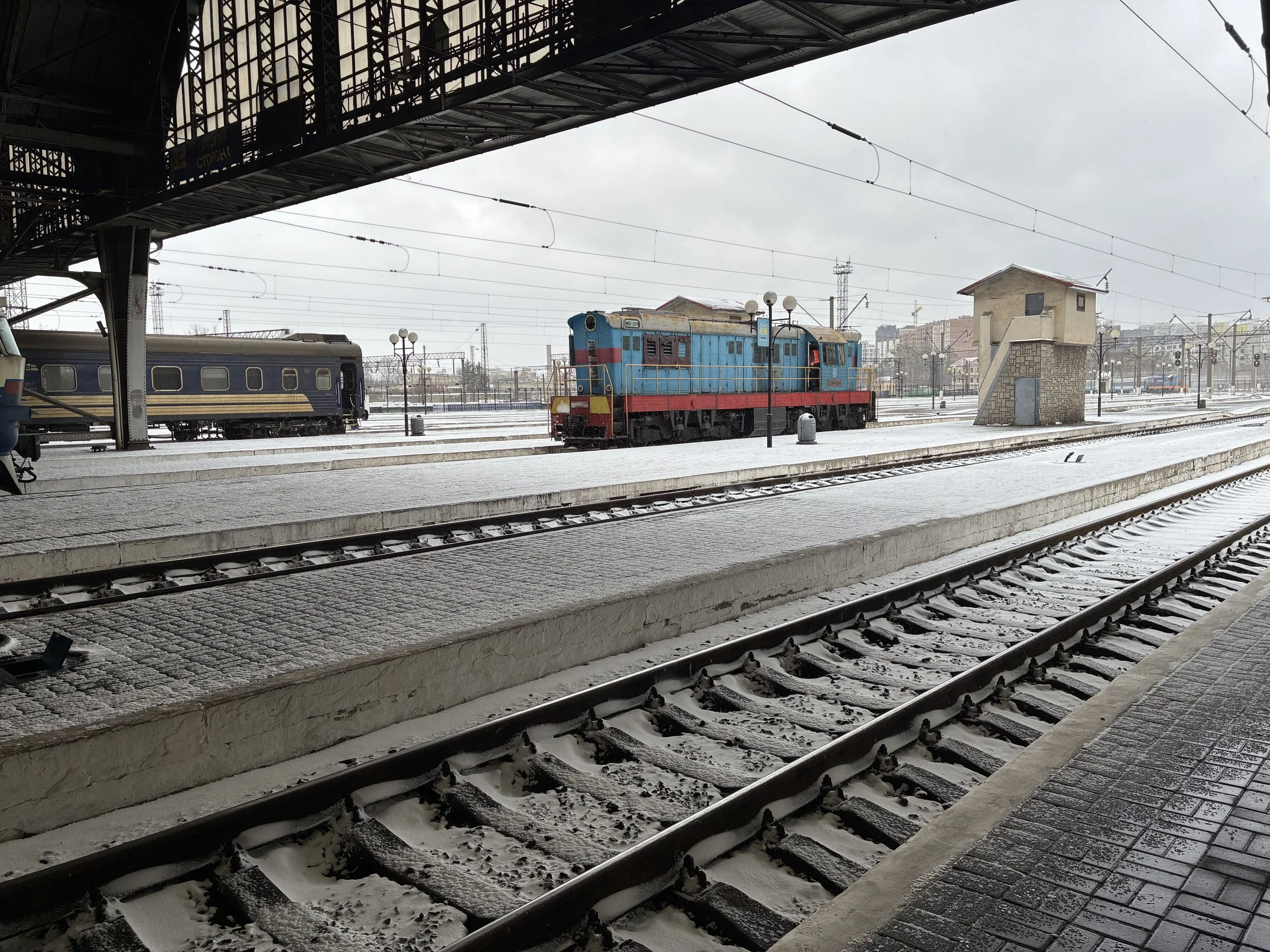
Then I took an old train to the town of Rivne where I was met by local SFSU volunteers. One of them is the principal of a school, a simple one-story building where I was asked to teach English to four classes of students. There’s a bomb shelter in the basement with just one bathroom for about 500 kids.
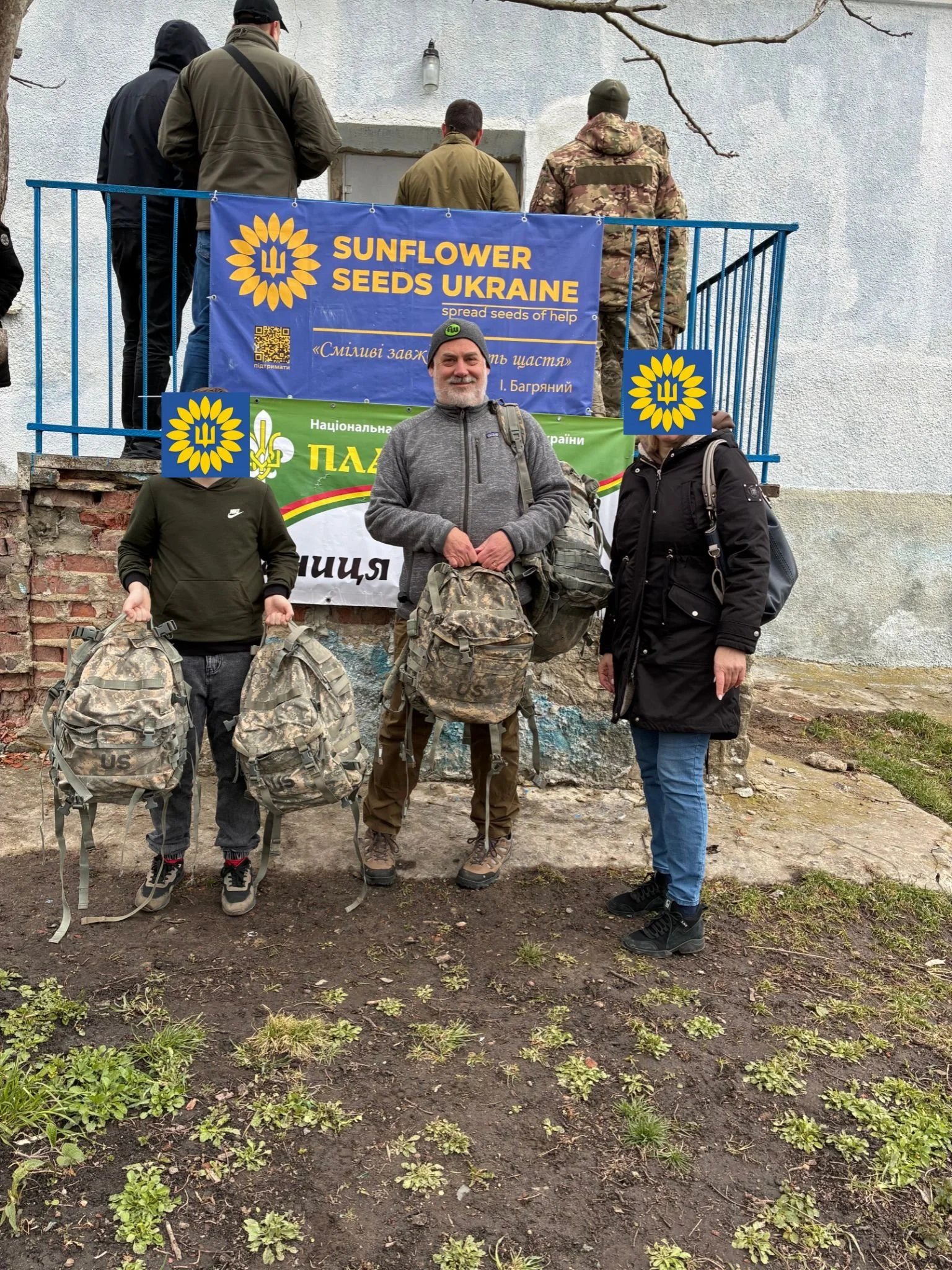
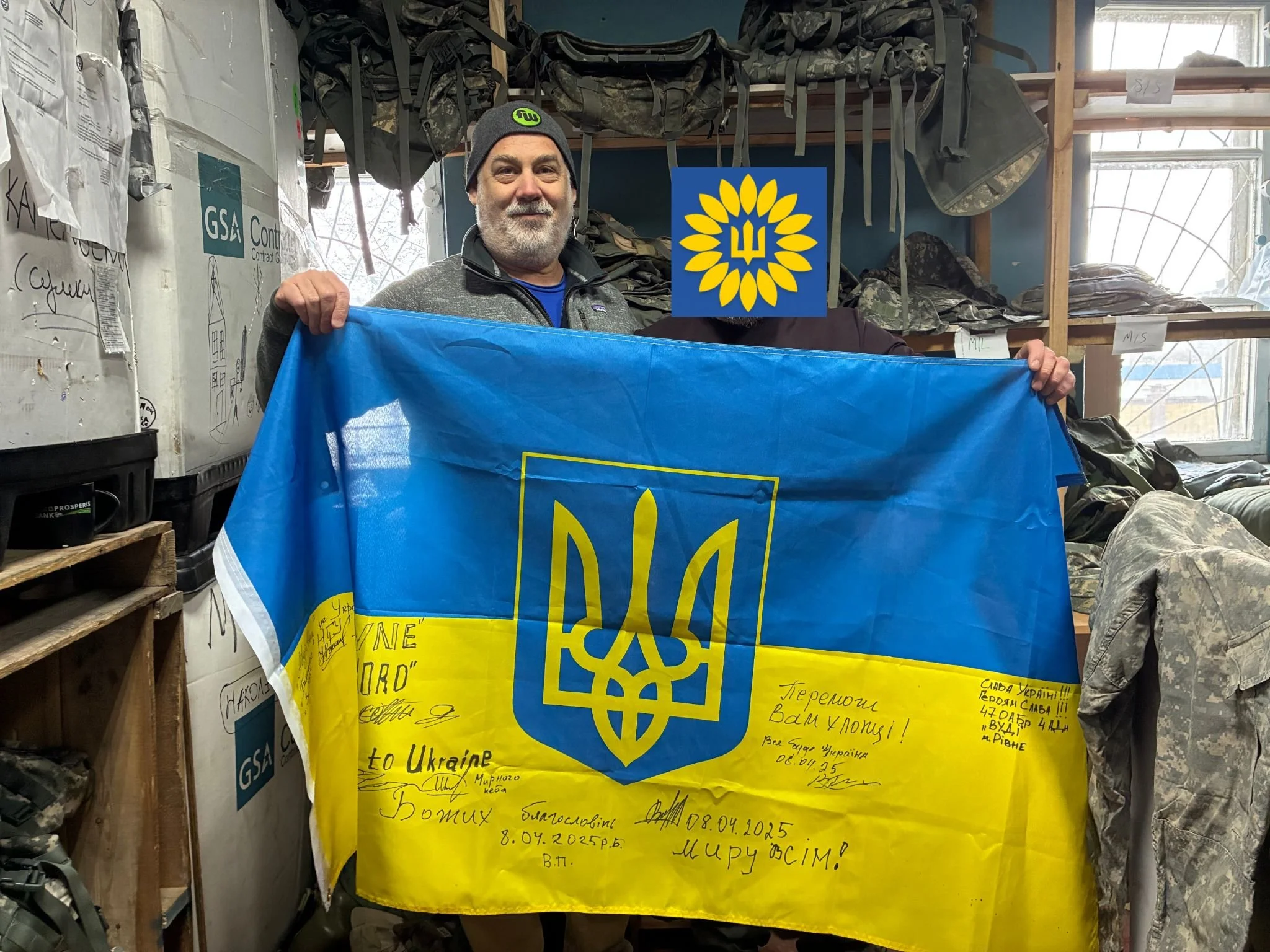
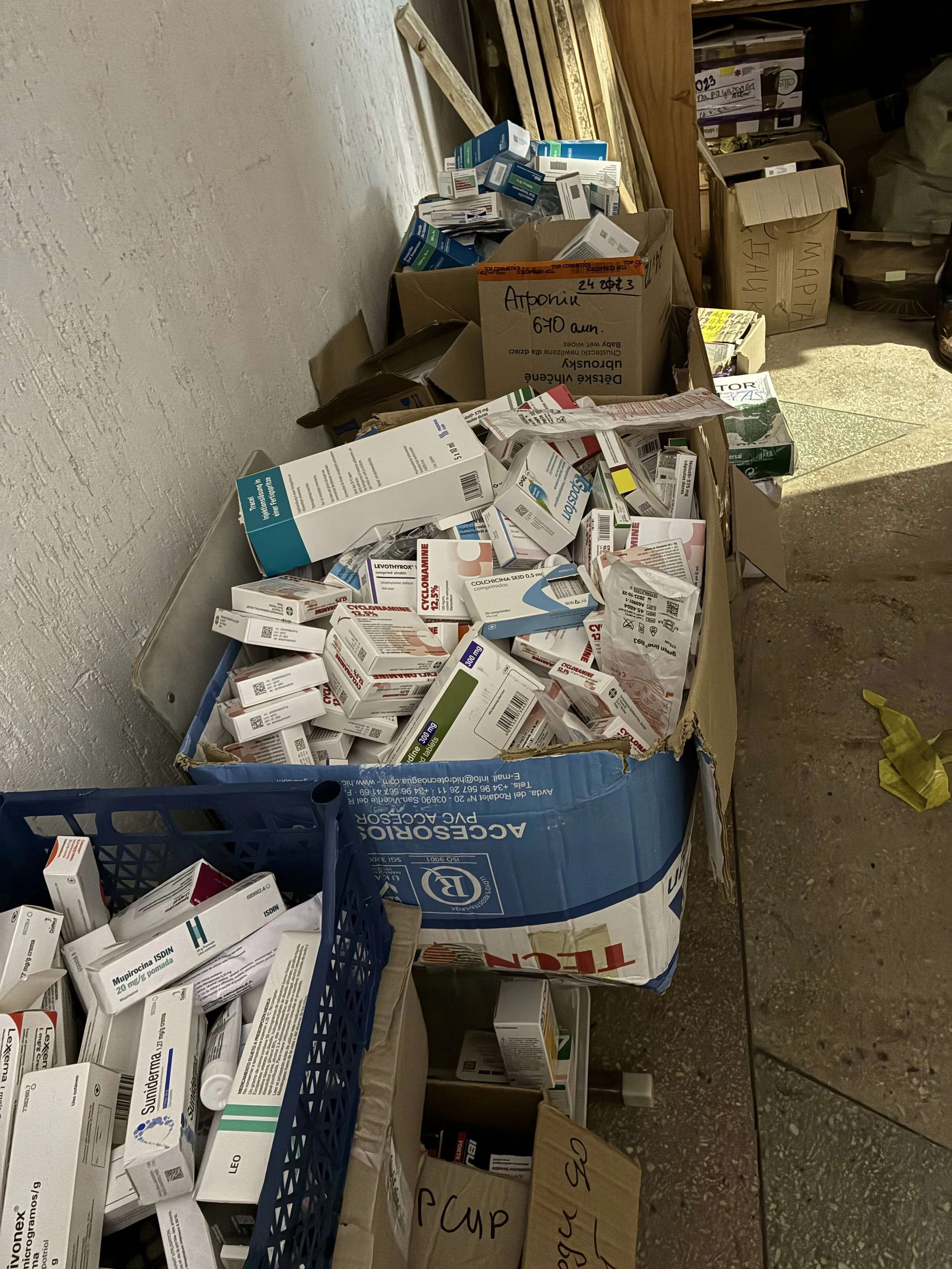
I helped in the nearby warehouse that receives the supplies Sunflower Seeds Ukraine sends from the U.S. The warehouse is really more of a four-room building operated by the national scouting association, Plast. About 10 students, one girl and nine boys, come by after school almost every day to help fulfill orders. These student volunteers are called “beavers” because they are part of the Beaver Scout Plast. They work hard, but they also like to joke and have fun.
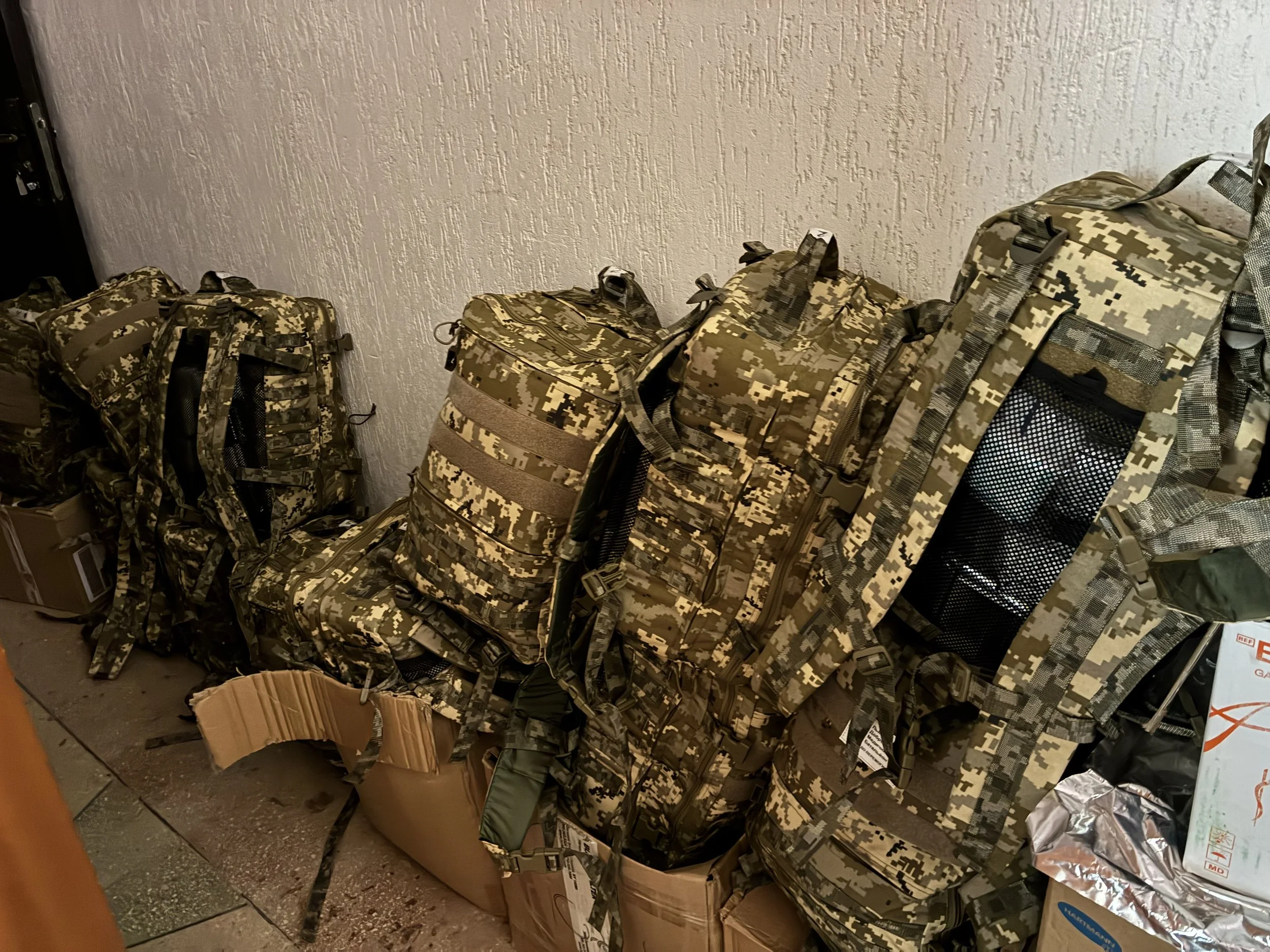
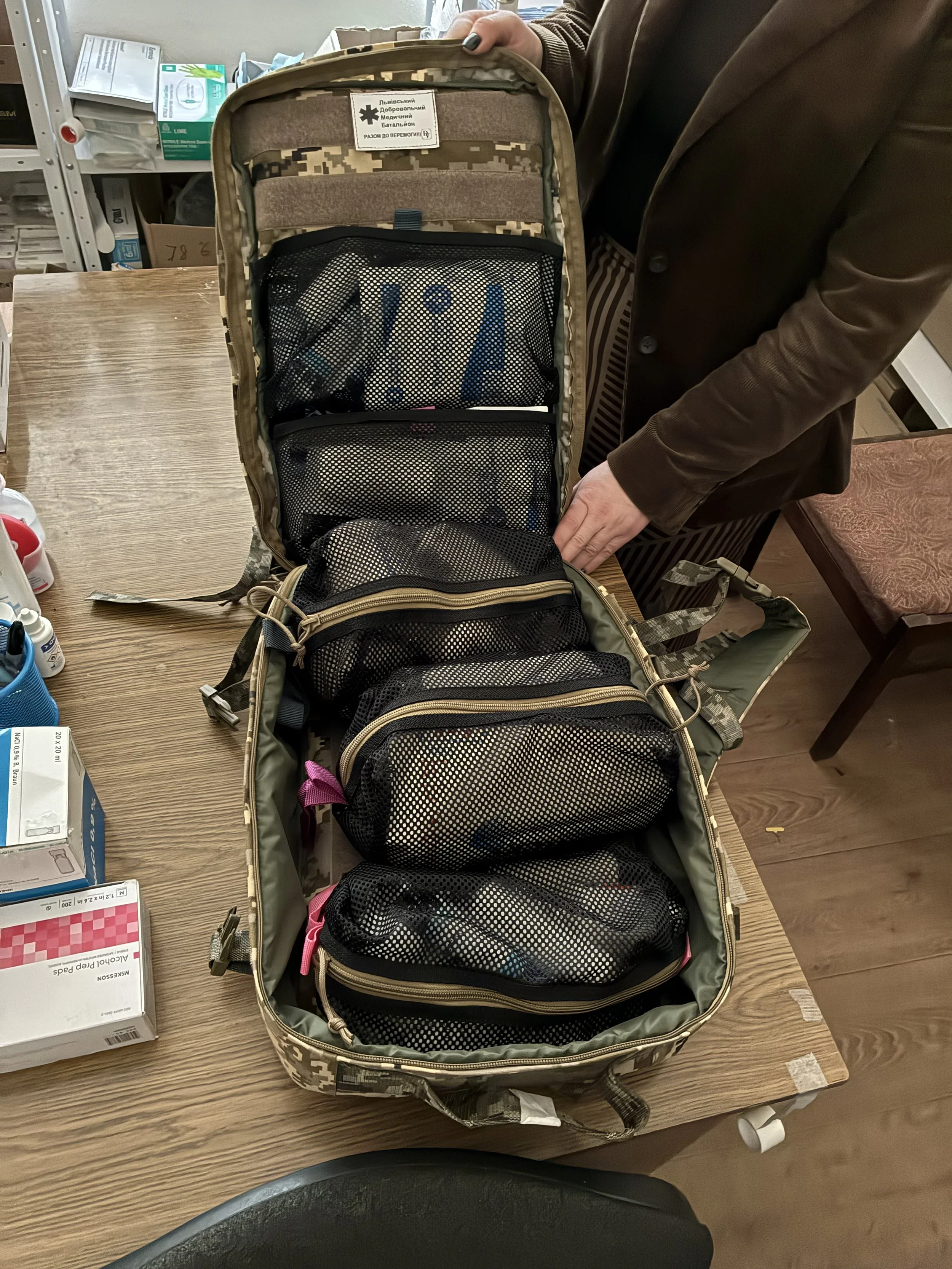
At the warehouse, I helped to assemble Individual First Aid Kits (IFAKS) and pack supplies for Defenders. Goggles, gloves, knee pads, optics, and backpacks are very popular items. We ship them to the frontlines, or Defenders come and collect them in person.
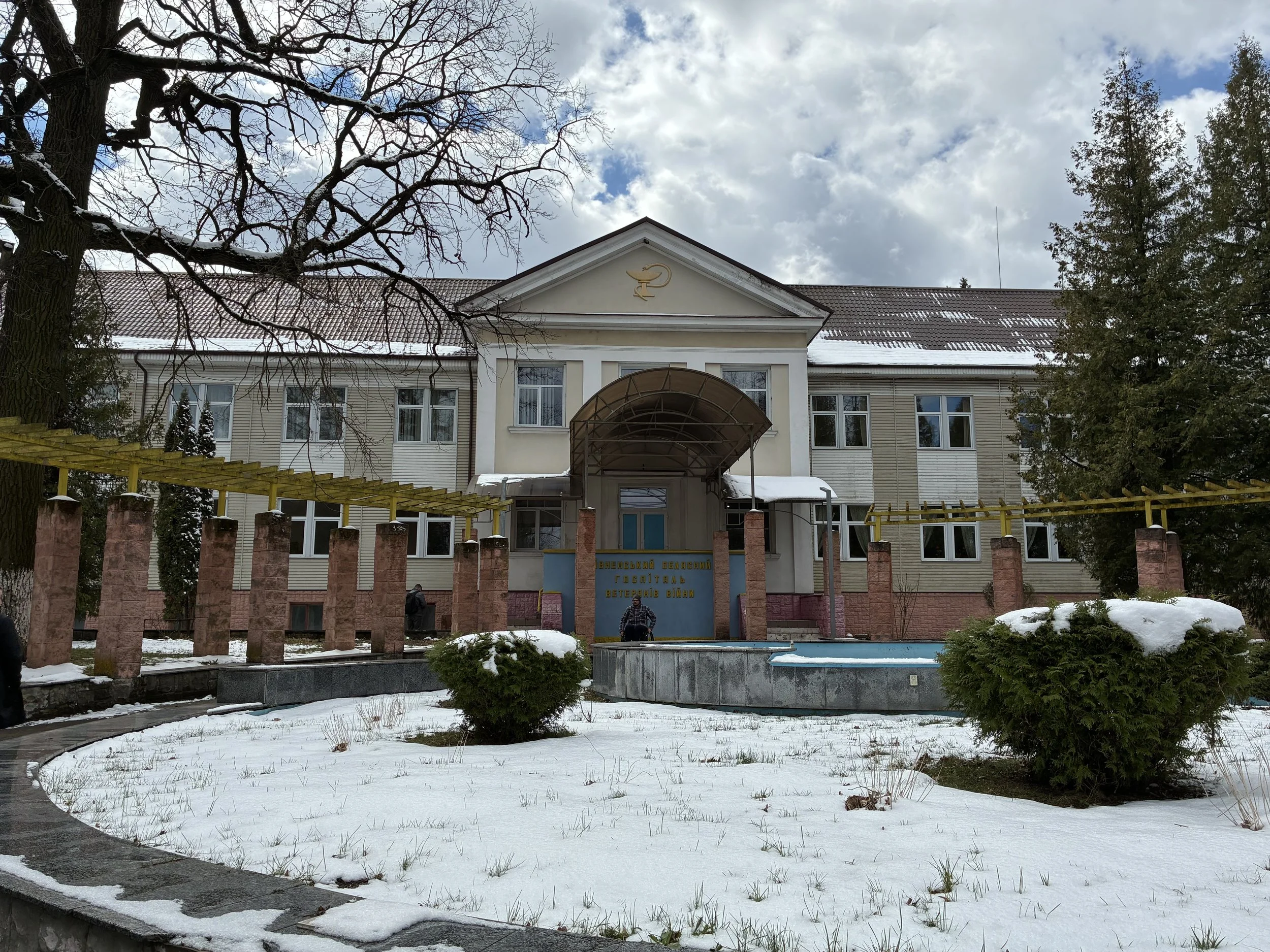
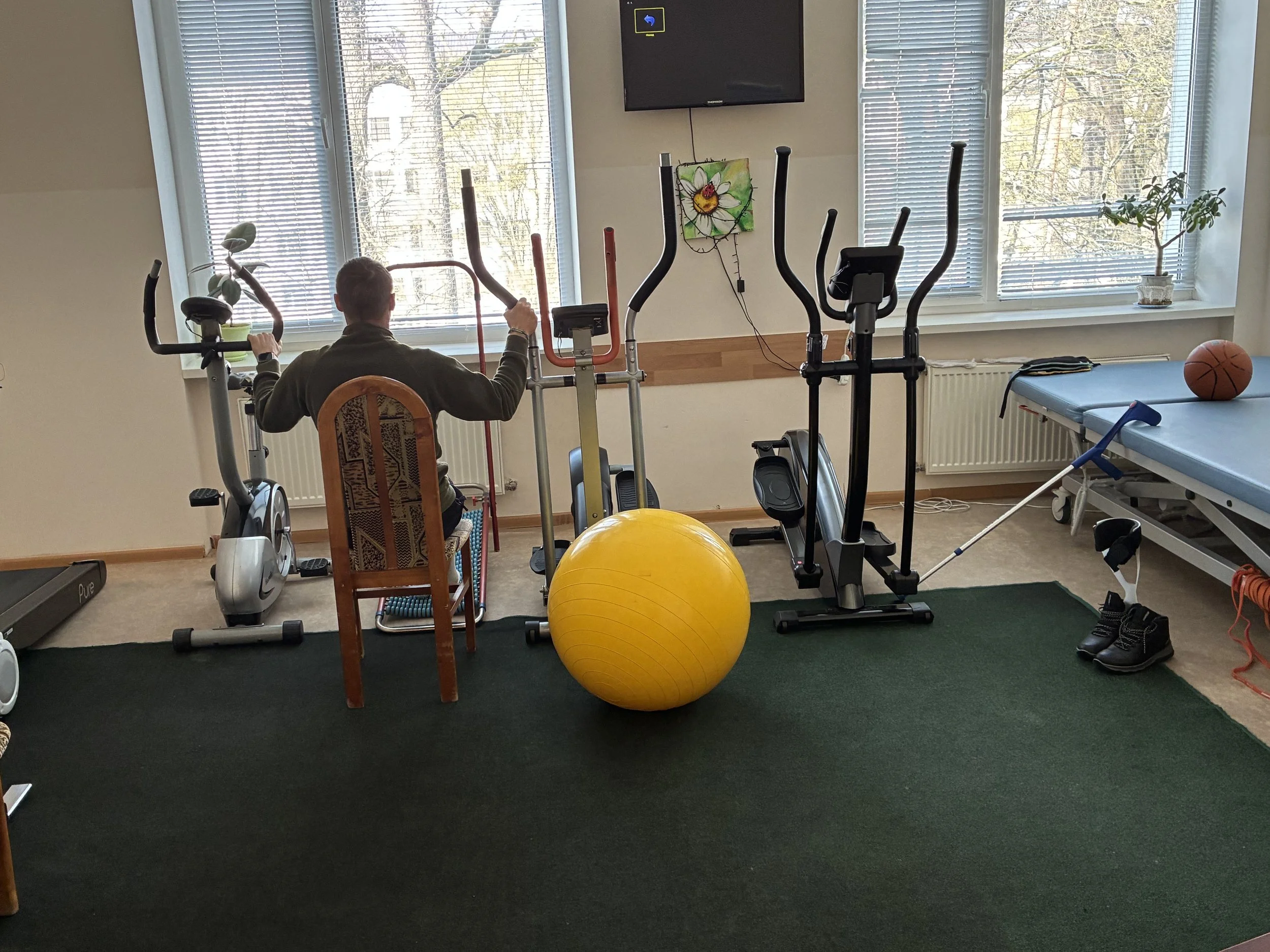
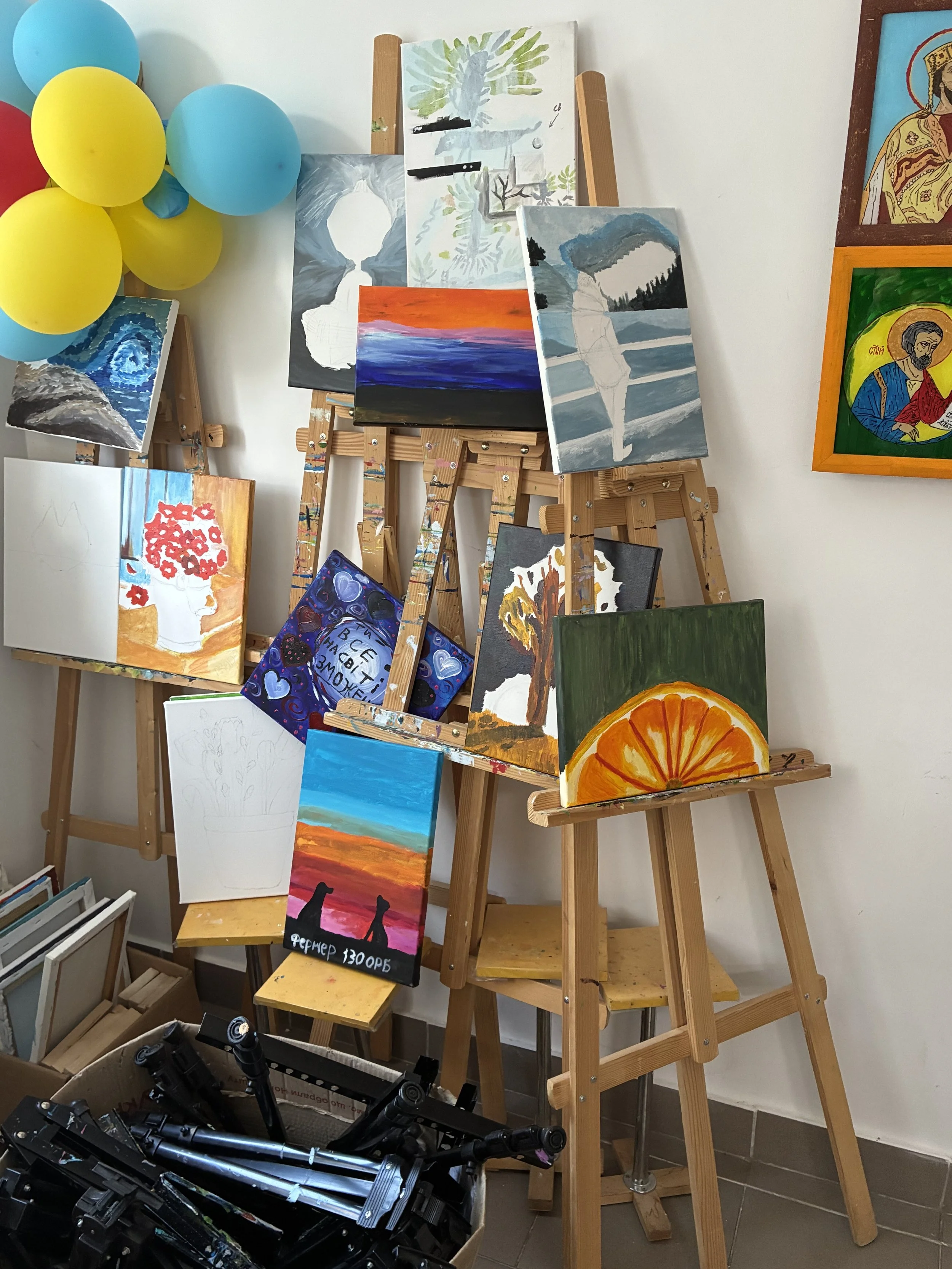
I also visited a military hospital and met the lead doctor. It was modern and clean with lots of weight rooms for strength training. There were soldiers with different types of injuries who could do painting, swimming, and exercises. In the back, there were 20-30 small houses where veterans could learn to be independent while still being on hospital grounds.