
OCTOBER 1: DEFENDERS DAY
October 1 marks one of the most meaningful days in the Ukrainian calendar—a day that unites faith, heritage, and courage. On this single date, Ukrainians celebrate Pokrova (the Intercession of the Holy Theotokos), Cossack’s Day, and the Day of Defenders of Ukraine. Together, these observances form a centuries-long chain of protection - from the heavenly shield of the Mother of God–to the modern defenders of Ukraine’s independence.
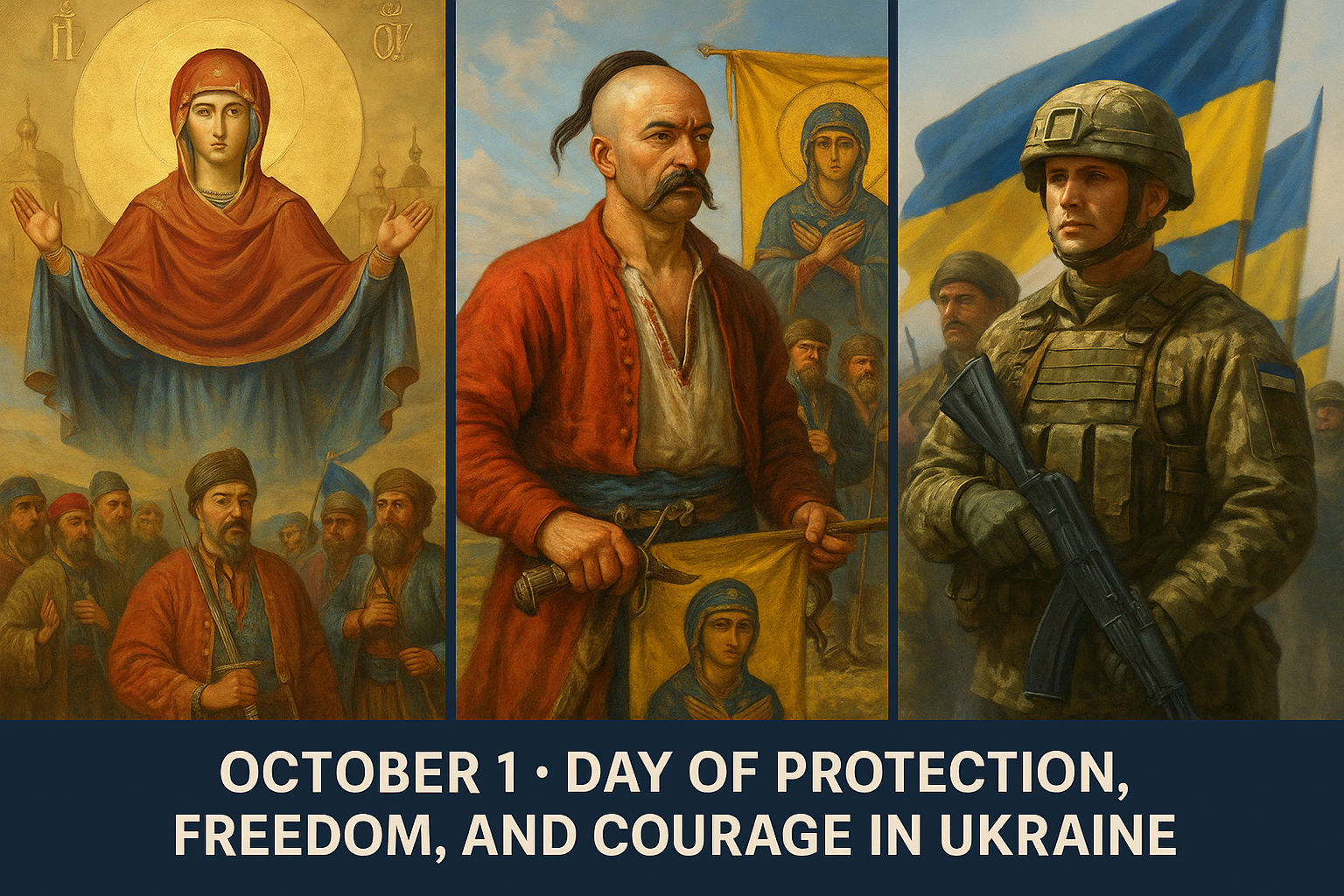
Pokrova — Faith and Divine Protection
The Feast of Pokrova, or the Intercession of the Theotokos, originates from Byzantine tradition. It commemorates the Virgin Mary’s miraculous protection of the faithful during peril and war.
In Ukraine, this feast took on a unique depth. Since the 15th–16th centuries, Zaporizhian Cossacks have regarded the Virgin Mary as their heavenly patroness. Churches in the Sich were dedicated to her, and many campaigns began with prayers to the Holy Pokrova for safety and victory.
Under the new Julian calendar, Pokrova is now celebrated on October 1. On this day, Ukrainians gather in churches to pray for their soldiers, for peace, and for divine shelter over the nation. The Pokrova veil — a symbol of protection — reminds everyone that faith and resilience go hand in hand.
A traditional prayer to Pokrova (The Intercession of the Most Holy Mother of God) in Ukraine asks for her protective veil to cover and defend the nation from evil and disaster. A specific prayer is: Під Твою милість прибігаємо, Богородице Діво, молитвами нашими в скорботах не погордуй, але від бід ізбав нас, єдина чиста і благословенна! which translates to "To your mercy we flee, O Virgin Mother of God; hear us in our sorrows, and deliver us from evils, O you alone pure and blessed!"
Cossack’s Day — Heritage of Freedom
The image of the Ukrainian Cossack remains one of the strongest symbols of national spirit. Independent, fearless, and devoted to freedom, the Cossacks defended their homeland from invaders for centuries.
Their banners often bore the image of the Holy Mother of God, and they celebrated Pokrova as their main spiritual feast. In 1999, Ukraine officially established Cossack’s Day on this date, honoring their traditions of courage, honor, and brotherhood.
Today, museums, schools, and cultural centers across Ukraine hold reenactments, parades, and educational events. The memory of the Cossack Sich—a democracy of warriors—continues to inspire Ukrainians’ modern sense of identity and self-determination.
Day of Defenders of Ukraine — Modern Courage

When Russia’s aggression began in 2014, Ukraine replaced the Soviet “Defender of the Fatherland Day” (celebrated on February 23) with its own version rooted in Ukrainian history and faith.Thus was born the Day of Defenders of Ukraine, originally celebrated on October 14 and now moved to October 1 alongside Pokrova and Cossack’s Day.
The idea was simple yet profound: those who defend Ukraine today — soldiers, volunteers, medics, chaplains, and ordinary citizens — stand in the same historical line as the Cossacks and the defenders of the past. Their strength lies not only in weapons, but in spirit, faith, and love of country.
Across Ukraine and around the world, people mark this day with prayer, remembrance, and gratitude. Monuments are adorned with flowers; churches hold memorial services; cities echo with the sound of the national anthem and the quiet words “Слава Україні — Героям слава!”
Pokrova’s protective veil once covered the Cossacks—today, it covers every defender standing guard over Ukraine’s freedom. October 1 reminds us that history is not just in books — it’s alive in every soldier’s courage, in every volunteer’s effort, and in every prayer for peace.
“From the Holy Pokrova to the Ukrainian Cossacks, and from the Cossacks to today’s Defenders — it’s one unbroken shield of faith, love, and freedom.”
Learn more:
Here are 10 fascinating and lesser-known facts about Pokrova, Cossacks, and the Day of Defenders of Ukraine, connecting faith, history, and modern national identity:
1. Pokrova originates from a 10th-century miracle in Constantinople
The feast commemorates the Virgin Mary’s appearance in the Blachernae Church (Constantinople, around 910 AD), where she spread her veil (pokrov) over the faithful to protect them from an invading army. This vision was witnessed by Saint Andrew the Fool for Christ—a saint especially revered in the Slavic world.
2. The word “Pokrova” means both “veil” and “protection”
In Ukrainian, покрова means a covering, shield, or mantle—symbolizing not only Mary’s veil but also divine shelter. Over time, it became a symbol of protection for both families and the nation.
3. Pokrova was the main feast of the Zaporizhian Sich
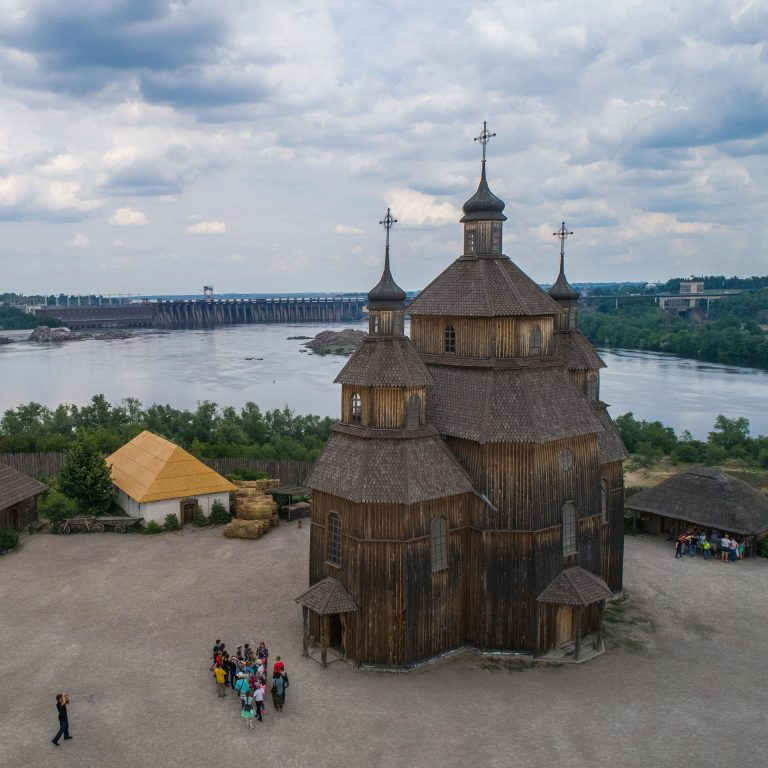
The Cossacks considered the Virgin Mary their heavenly commander. Every Sich had a Pokrova Church, and campaigns began and ended with prayers before her icon. The most famous was the Pokrova Church on Khortytsia Island, near modern Zaporizhzhia.
4. Cossack councils (radas) often gathered on Pokrova
Major Cossack political and military decisions, including the election of a hetman (leader), were sometimes held on or near Pokrova, giving the day not just religious but also civic and democratic importance.
5. Pokrova is also known as a day for weddings and family blessings
According to Ukrainian folk custom, “Покрова покриє голову хусткою” (“Pokrova will cover a maiden’s head with a scarf”), meaning many weddings were traditionally arranged after harvest and blessed under the Virgin’s protection.
6. The Day of Defenders of Ukraine replaced a Soviet holiday
In 2014, amid Russia’s aggression, President Petro Poroshenko established October 14 as the Day of Defenders of Ukraine, deliberately replacing the Soviet “Defender of the Fatherland Day” (February 23). In 2023, it was moved to October 1 under the new church calendar.
7. The name now honors both men and women defenders
The official title is “Day of Defenders and Defendresses of Ukraine” (День захисників і захисниць України) — recognizing the crucial role of women serving in the Armed Forces and volunteering at all levels.
8. Pokrova banners appeared in 20th-century independence movements
During the Ukrainian People’s Republic (1917–1921) and later the UPA (Ukrainian Insurgent Army) in WWII, Pokrova imagery was used on banners and icons, thereby connecting the struggle for independence to sacred protection.
9. Many military chaplains consider Pokrova their professional feast
The chaplain service of the Armed Forces of Ukraine celebrates its patronal day on Pokrova. Soldiers often receive small icons of the Intercession as spiritual armor and a sign of faith in victory and survival.
10. Ukrainian communities abroad also celebrate October 1
From Toronto to Warsaw, Ukrainian churches and diaspora organizations hold joint services and remembrance events on October 1, blending liturgy, historical exhibitions, and support for today’s soldiers — showing that the tradition of protection truly spans the world.
