
NOT A WAR OF DECOLONIZATION
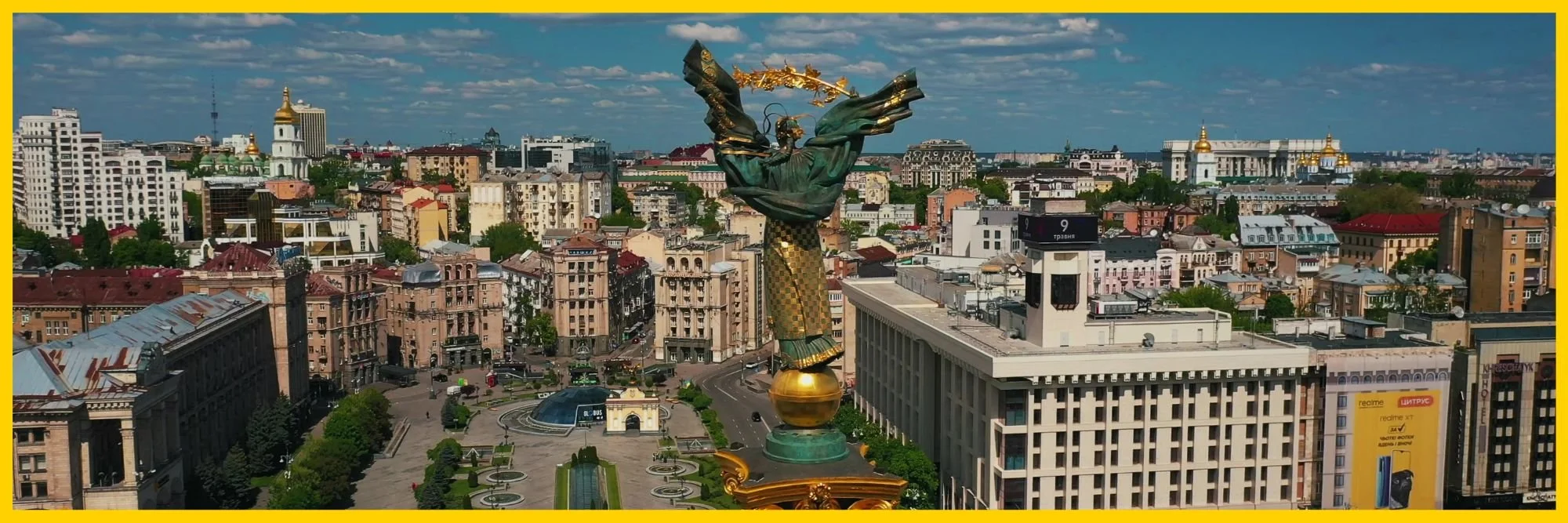
Many call the war in Ukraine a decolonization struggle. But this framing obscures the core issue. Yes — Russia is the last European empire — but it was never a true metropolis for Ukraine. Unlike India under Britain or Algeria under France, Ukraine was not a faraway possession. It was the only older culture, but also the historical root of Eastern Slavic civilization. The current war is not just about escaping an empire. It is also about resisting the long-standing imperial lie that Ukraine was born of Russia — when the truth is exactly the opposite.
Russia, or more precisely, Muscovy, rose centuries after Kyiv had already established itself as a cultural, religious, and political center. What we see today is not a rebellion of a periphery state, but the center defending itself from a usurper.
Russia hides this truth behind a complex web of myths and ideological masks, adapting its image to suit foreign audiences. To Western conservatives, it poses as the bastion of Christian tradition; to Western leftists — as the Soviet heir of anti-capitalist resistance; to audiences in Africa, India, and Latin America — as an anti-colonial force standing up to Western imperialism. But this is pure deception — a carefully crafted imperial fairy tale.
Only Russia’s closest neighbors know the real face behind these masks. Ukraine, Lithuania, Latvia, Estonia, Poland, and others have seen — over and over — that Russian "liberation" means looting, repression, torture, and cultural erasure.
Long before Moscow emerged, Kyiv was the political, spiritual, and cultural heart of Eastern Europe. From the 9th to the 11th centuries, Kyivan Rus united a vast federation of Slavic and Finnic tribes under local dynasties. Despite outdated myths of Viking rule, the leading families were overwhelmingly native. Archaeology and modern historiography confirm that the so-called “Varangians” were likely assimilated foreigners or adopted titles — not conquerors.
A prime example of mythmaking is the figure of Rurik — often presented in Russian imperial history as the founder of the Rus’ dynasty. In reality, the tale of Rurik was a literary invention given prominence in the 18th and 19th centuries, particularly by imperial historians like Tatishchev and Karamzin, to construct a continuous dynastic lineage from Scandinavia to Moscow. There is no contemporary evidence that Rurik ever existed as described, nor that he founded a state. The legend served one purpose: to frame Muscovy as the rightful heir to Kyivan Rus, and thereby to Ukraine's historical legacy.
Kyiv flourished under Volodymyr the Great and Yaroslav the Wise. It embraced Orthodox Christianity in 988, developed a written legal code (Rus’ka Pravda), and became a key node in European trade and diplomacy. Its cultural and religious influence reached far beyond its borders — and long before Moscow even existed.
Ironically, the very founder of Moscow, according to historical tradition, was Yuriy Dolgorukiy — a prince of Kyiv and son of Volodymyr Monomakh. In the 12th century, he built a wooden fort on the Moskva River, marking the first mention of Moscow in 1147. This often-forgotten fact further underscores the inversion of history perpetrated by Russian imperial narratives: the city that would later claim to inherit the legacy of Kyivan Rus was, in fact, established by a Kyivan prince — not the other way around.
Adding to the irony, even the very term "Kyivan Rus" was coined not in the early medieval period, but centuries later by Russian imperial historians. Seeking to subdivide the legacy of the Rus' and assign ownership to various territories, they fabricated terms like "Kyivan Rus," "Novgorodian Rus," and others. These constructs served to blur the central role of Kyiv and flatten historical distinctions, supporting the imperial narrative that all East Slavic peoples share a single, Moscow-centered origin — a narrative that continues to distort history to this day.
In the 17th century, during and after the Pereiaslav Treaty (1654), many Ukrainians — especially Kyiv-educated clergy, Cossack leaders, and scholars — played a major role in shaping the Muscovite state. Ukrainian bishops reformed Moscow’s Orthodox hierarchy. Ukrainian scribes, thinkers, and military leaders staffed the empire’s institutions. Yet their impact was gradually erased from Russian memory — replaced by a centralized myth: one people, one empire, one historical origin in Moscow.
This historical irony is striking: time and again, Ukrainians were the building force behind the empire that would later suppress them. From statecraft and theology to education and military reform, Ukrainians helped lay the foundations of the Russian imperial project — only to see their contributions written out, their culture appropriated, and their identity denied.
Another frequently repeated myth is that Ukraine was "created by Lenin" in the early Soviet period. In reality, Ukraine had declared independence in 1918, and the Soviet state only seized control after a brutal war of conquest. While many versions of the myth claim that Lenin "gave" Ukraine statehood, the historical record tells a different story. Lenin’s writings and policies make clear: he viewed Ukraine as essential to Soviet viability, opposed its independence, and underscored that dominating it was non-negotiable.
In the Manifesto to the Ukrainian People with an Ultimatum to the Ukrainian Rada (December 1917), Lenin and Trotsky demanded that Kyiv submit to Soviet authority — or face war. This was followed by military invasion. Later, in his Letter to the Workers and Peasants of Ukraine (December 28, 1919), Lenin candidly admitted the Soviet regime had made “not a few mistakes” in Ukraine, and again emphasized Ukraine’s role as a “fraternal” but subordinate republic in the Soviet system.
Ukraine was not built by Lenin — it was invaded by him, and absorbed through force into a project that depended on controlling its grain, coal, and people. This ideology still remains a keystone of Russian imperial obsession to this day.
But the truth endures. The war today is not about rejecting some “cultural parent” — it’s about resisting historical theft. Russia does not own Ukraine’s legacy. Kyiv was never a colony. It was the teacher, the source, the elder. The golden domes of Kyiv rose when Moscow was still a forest outpost.
Ukraine is not reclaiming independence. It’s defending historical continuity — and the civilizational truth that Moscow has tried to bury for centuries.
