
“GRANDPA, WHAT WAS THE HOLODOMOR?”
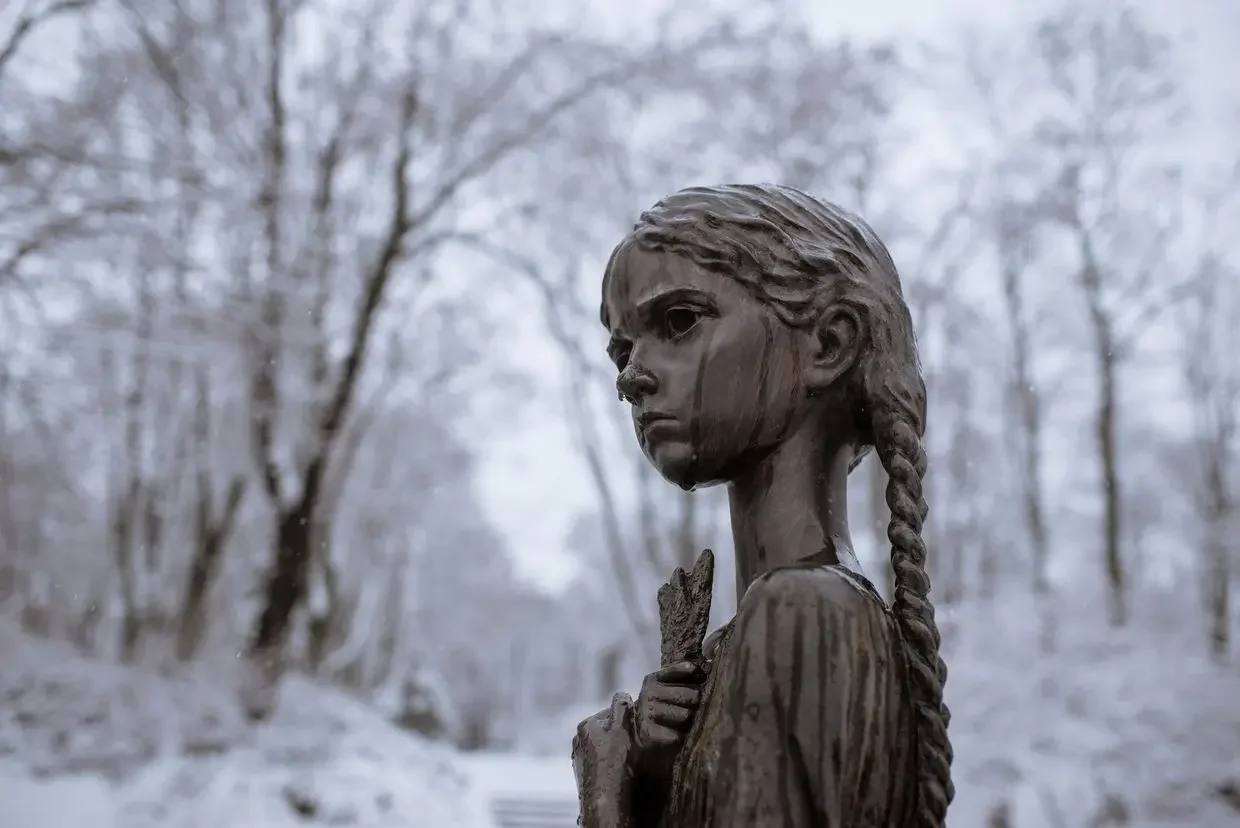
Image borrowed from The Kyiv Independent.
A conversation between a grandson and his grandpa
Grandson: Grandpa, people online argue about the Holodomor. What actually happened?
Grandpa: In 1932–1933, the Soviet government created a famine in Ukraine. It wasn’t drought or “bad luck.” It was policy. They took food, sealed villages, stopped people from leaving, and refused help. That’s why we call it genocide—because the state deliberately created conditions meant to destroy Ukrainians, especially farmers and villagers.
Grandson: Genocide—like in the UN definition?
Grandpa: Exactly. The convention says genocide includes “inflicting conditions of life” meant to destroy a group. In Ukraine, the conditions were engineered: confiscations, blacklists of entire villages, travel bans, and punishment for even picking fallen grains from the field.
Grandson: Why did the Kremlin do this?
Grandpa: Two big reasons.
First, it was to crush Ukrainian identity and resistance. The Kremlin feared a confident Ukrainian nation. In the late 1920s and early 1930s, it attacked our culture and leaders. That time is called the “Executed Renaissance”—writers, artists, teachers, priests, scholars were arrested, shot, or sent to camps. Ukrainization policies were rolled back—also in Ukrainian-majority areas like the Kuban. At the same time, the state punished villages with blacklists and, in January 1933, banned peasants from leaving Ukraine. People were trapped with no food.
Second, it was to force collectivization and strip resources for rapid industrialization. The regime wanted total control of agriculture to feed its factories and projects like DniproHES and Magnitogorsk. It imposed impossible grain quotas, pushed people into collective farms (kolkhozy), and hunted so-called “kulaks” during dekulakization—seizing property and deporting families. In August 1932, the “Law of Five Ears of Grain” made even gleaning a crime. In December 1932, internal passports were introduced but withheld from most rural people—another way to pin starving peasants in place.
Grandson: Did people just accept that?
Grandpa: No. The countryside pushed back. There were thousands of protests in 1929–1930—some small, some large. A striking form were “babskyi bunty”—women-led actions. Women blocked meetings, defended churches, and resisted livestock seizures. The state answered with arrests, deportations, and ever-harsher controls. By late 1932, the net was tight: blacklists, door-to-door searches for hidden food, and roadblocks.
Grandson: What did everyday life look like?
Grandpa: House-to-house brigades took grain, potatoes, meat—everything. Ovens were ripped up to find hidden stores. Villages went silent. People tried to reach cities or other regions but were turned back by travel bans. Some survived on weeds and tree bark. Many didn’t survive at all. Cities had ration cards—barely enough, but enough to keep factories running. The countryside was sacrificed.
Grandson: Wasn’t the whole USSR hungry back then?
Grandpa: There were other famines—Kazakhstan suffered terribly, and earlier the Volga region did—but in late 1932–1933 the stack of punitive measures—blacklists, sealed borders, rollback of Ukrainization, and targeted cultural purges—was concentrated in Ukraine and Ukrainian-majority areas. That targeting is the point.
Grandson: How many died?
Grandpa: Millions. Most careful estimates for Ukraine run roughly 3.5 to 5 million excess deaths. Birthrates also collapsed. Villages were emptied. Later came population transfers that changed the character of many places.
Grandson: How do we know all this?
Grandpa: From documents, maps, and people’s stories. Families passed memories down—what they saw, what they ate to survive, who didn’t make it. Scholars have mapped blacklisted districts and death patterns. Ukrainian archives and museums have been opening more material. At the same time, Russia has shut doors—limiting access to Stalin-era archives and closing organizations like Memorial—which makes some high-level records harder to study.
Grandson: So the goal wasn’t just food for the cities?
Grandpa: No. The goal was control—of land, grain, people, and the future. Break the villagers, break the culture, and the empire sleeps easier. That’s why we remember. Not to stay angry—but to tell the truth.
Grandson: What should I read to learn more?
Grandpa: Start with Ukraine’s Holodomor Museum for documents and clear explanations. Look at Canada’s HREC for translated decrees and teaching materials. And check the Harvard MAPA project to see how policy and death overlapped on the map. Then listen to survivor testimonies—those voices carry what papers can’t.
———
Tiny glossary (plain language)
Blacklists (чорні дошки): Entire villages cut off from trade, supplies, and aid; homes searched for food.
Dekulakization (розкуркулення): Seizing “kulak” households’ property; executions, deportations, or exile.
Collectivization: Forcing peasants into collective farms (kolkhozy) under state control.
“Law of Five Ears” (Aug 7, 1932): Harsh punishments—even for picking leftover grains.
Internal passport (Dec 27, 1932): ID system that largely excluded peasants, trapping them in place.
“Executed Renaissance”: Purge of Ukrainian cultural and religious leaders in the early 1930s.
“Babskyi bunty”: Women-led rural protests against collectivization and seizures.
———
Further reading: https://www.sunflowerseedsukraine.org/blog/the-holodomor
This blog post was crafted with the help of AI.
